Free to Succeed

Building Success on a Foundation of radical Trust
The modern workplace is flooded with advice on how to succeed. We’re told to lean in, find our grit, hustle harder, and disrupt everything—often in the same week. The sheer volume of contradictory guidance can be overwhelming, leaving even the most motivated professionals feeling directionless. But maybe, just maybe, giving (or having) less direction and more freedom could be the path to greater performance.
Imagine a company with no managers, no promotions, and no job titles. It sounds like a recipe for chaos, but for the gaming company Valve, it's the formula for groundbreaking innovation. In this flat, non-hierarchical structure, employees are empowered with radical freedom and accountability.
The thing that keeps the multi-billion dollar company moving isn’t the CEO’s force of will, market savvy, or a unique approach to vertical integration. Instead, it is a shared commitment to common vision and values – purpose – that creates a culture of trust across all levels of the organization.
The core features of this model are designed to maximize agility and ownership. Employees choose which projects to work on based on where they can add the most value. Even the office desks have wheels, allowing teams to form, dissolve, and reform organically as projects evolve. This stands in stark contrast to the corner offices and fixed cubicles that physically reinforce the status hierarchies of most corporations, turning organizational structure into a fluid, project-based reality.
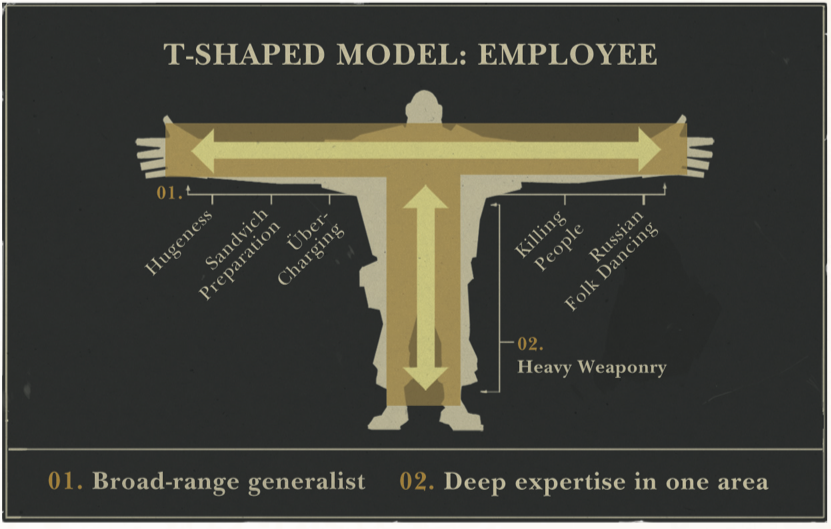
Model of a T-shaped employee, depicting a character from one of Valve’s most successful games.
This system works because Valve hires what they call "T-shaped people"—individuals who are generalists across a broad set of skills but also possess deep expertise in one specific area. By trusting these individuals to direct their own work, the company fosters an unparalleled sense of personal responsibility. The guiding philosophy is simple but profound:
"You were hired to constantly be looking around for the most valuable work you could be doing."
This approach replaces traditional management oversight with peer-based accountability and an intense focus on collective success, proving that radical freedom can be a powerful catalyst for performance.
We’re not all fortunate enough to be able to work in an industry focused on providing fun for their customers like Valve. It might even seem like the stakes in your organization are too high to allow for the level of trust they offer….but if that’s the case, you might want to ask yourself: are our common values as strong as we need them to be?
Where could you apply this to your work relationships? To your community? Where might a little trust go a long way?